Data Science vs Data Analytics: The Simple Guide (2026)
A clear, no-fluff breakdown of Data Science vs Data Analytics — what each field actually does, the skills and tools each one uses, real-world examples, and how to know which career or hire fits your needs.
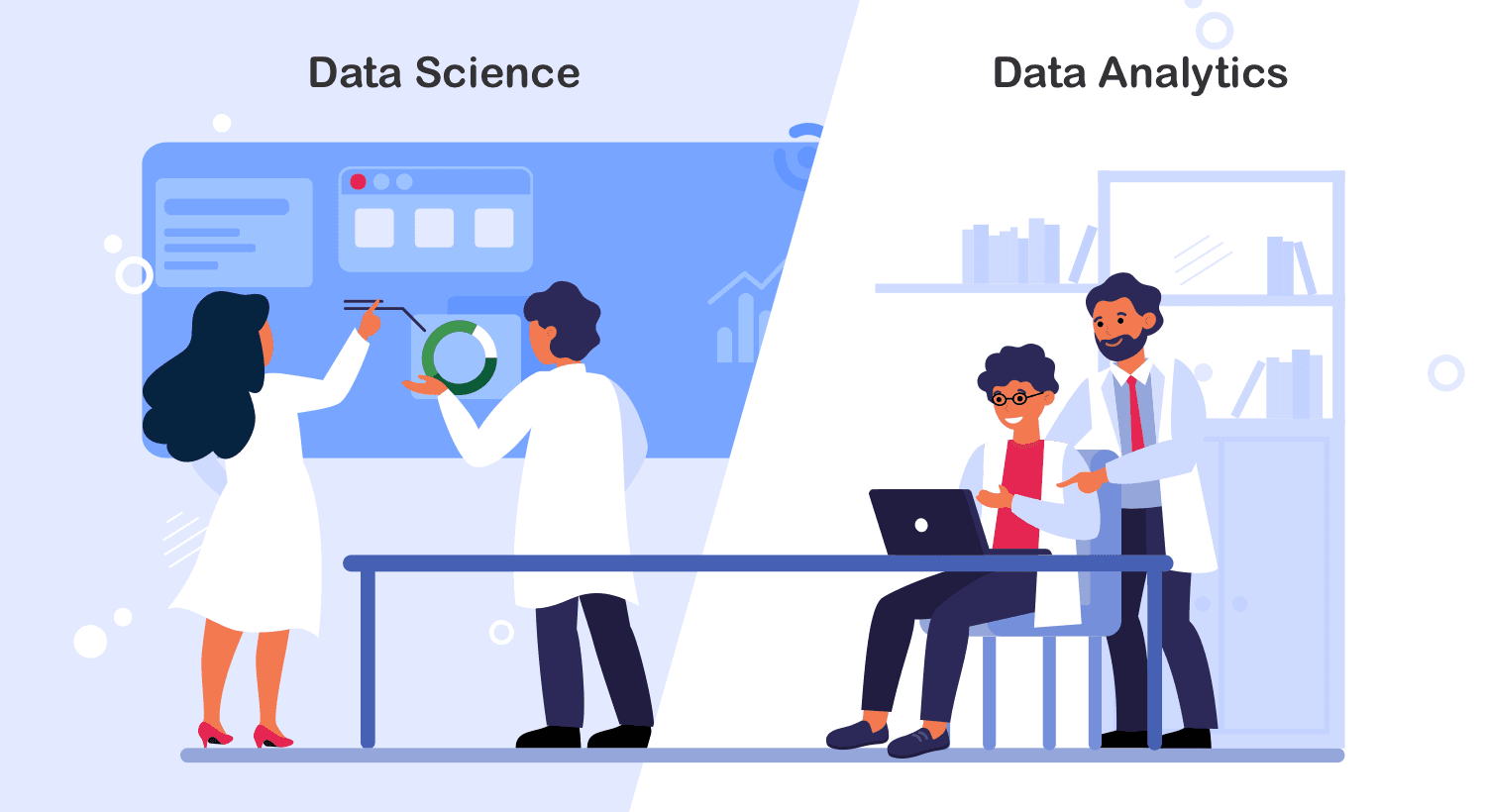
Same Data, Different Jobs
Data science and data analytics both work with data — but they ask fundamentally different questions. Data analytics looks backward: what happened, and why? Data science looks forward: what's likely to happen next, and how do we build something that predicts it? The confusion between the two comes from the overlap in tools, but the actual work, skills, and outcomes are quite different.
Data analytics explains the past. Data science predicts the future. Both matter — they just solve different problems.
What Is Data Analytics?
Data analytics is the practice of examining existing data to find patterns, trends, and answers to specific business questions. An analyst takes data that already exists — sales numbers, website traffic, customer surveys — and turns it into clear insights and reports that people can act on.
- Building dashboards and reports for business decisions
- Identifying trends in sales, marketing, or customer behavior
- Answering specific questions like "why did revenue drop last month?"
- Cleaning and organizing structured data for clarity
Data analytics is fundamentally about clarity and explanation — turning raw numbers into a story decision-makers can understand and act on.
What Is Data Science?
Data science is a broader, more technical field focused on building models that predict outcomes and uncover patterns humans wouldn't spot manually. It combines statistics, programming, and machine learning to work with data at a much deeper level — often large, messy, and unstructured datasets.
- Building machine learning models to predict future outcomes
- Developing recommendation systems (like "you may also like")
- Detecting fraud or anomalies automatically in real time
- Working with unstructured data — text, images, sensor data
Data science is fundamentally about prediction and automation — building systems that learn from data and get smarter over time, not just explain what already happened.
Side-by-Side Comparison
| Data Analytics | Data Science | |
|---|---|---|
| Core question | What happened, and why? | What will happen next? |
| Main tools | SQL, Excel, Tableau, Power BI | Python, R, TensorFlow, machine learning libraries |
| Data type | Mostly structured, existing data | Structured and unstructured, often large-scale |
| Output | Reports, dashboards, insights | Predictive models, algorithms, automated systems |
| Skill depth | Statistics basics, business context | Advanced statistics, programming, ML theory |
Real-World Example
Imagine an e-commerce company noticing a drop in sales. A data analyst would dig into existing sales data, spot that cart abandonment spiked after a checkout page redesign, and report it clearly to the team. A data scientist would go a step further — building a model that predicts which customers are likely to abandon their cart before it happens, and triggering an automatic discount offer to prevent it.
Same company, same underlying data — but one explains the problem, and the other builds a system to solve it automatically.
Which One Do You Need?
| If you need to... | Choose |
|---|---|
| Understand what's happening in your business right now | Data Analytics |
| Build dashboards and regular reporting | Data Analytics |
| Predict future customer behavior or churn | Data Science |
| Build a recommendation engine or fraud detection system | Data Science |
Conclusion
Data analytics and data science aren't competing fields — they're different depths of the same discipline. Analytics gives you clarity on what's already happened, so you can make better decisions today. Data science builds the models that predict what happens next, so your product or business can act automatically before a human even notices the pattern. Most mature companies eventually need both — analytics to understand the present, and data science to shape the future.
Frequently Asked Questions
What is the main difference between data science and data analytics?▼
Data analytics focuses on examining existing data to answer specific questions and explain what already happened. Data science goes further — it builds predictive models and algorithms to forecast what will happen next, often using machine learning, and works with larger, messier, less structured data.
Do data scientists need to know coding, and do data analysts?▼
Data scientists typically need strong programming skills, especially in Python or R, along with machine learning and statistics knowledge. Data analysts need some technical skill too, usually SQL and spreadsheet or BI tool proficiency, but generally less heavy programming than data scientists.
Which pays more, data science or data analytics?▼
Data science roles generally pay more on average because they require a broader and deeper skill set — statistics, machine learning, programming, and often a more advanced degree. Data analytics is usually a more accessible entry point with a shorter learning curve and slightly lower average pay.
Should my business hire a data analyst or a data scientist?▼
Hire a data analyst if you need someone to answer specific business questions from your existing data — sales trends, customer behavior reports, dashboards. Hire a data scientist if you need predictive models, recommendation engines, or systems that learn from data and improve over time.
Related Blogs
SaaS vs PaaS vs IaaS Explained: The Simple Guide (2026)
A clear, no-fluff breakdown of SaaS, PaaS, and IaaS — what each cloud service model actually means, real-world examples, the key differences, and how to know which one applies to what you're building or using.

Types of Software We Build: A Simple Guide to Choosing the Right One (2026)
A concise look at the different kinds of software businesses actually need in 2026 — from websites and web apps to mobile apps, SaaS products, automation tools, and custom internal systems — and how to know which one fits your business.