Trump Goes to China: Inside the High-Stakes Beijing Summit with Xi Jinping
US President Donald Trump arrives in Beijing for a two-day summit with Chinese President Xi Jinping — the first visit to China by a sitting US president since 2017. Here's everything you need to know about the talks, trade deals, and global implications.
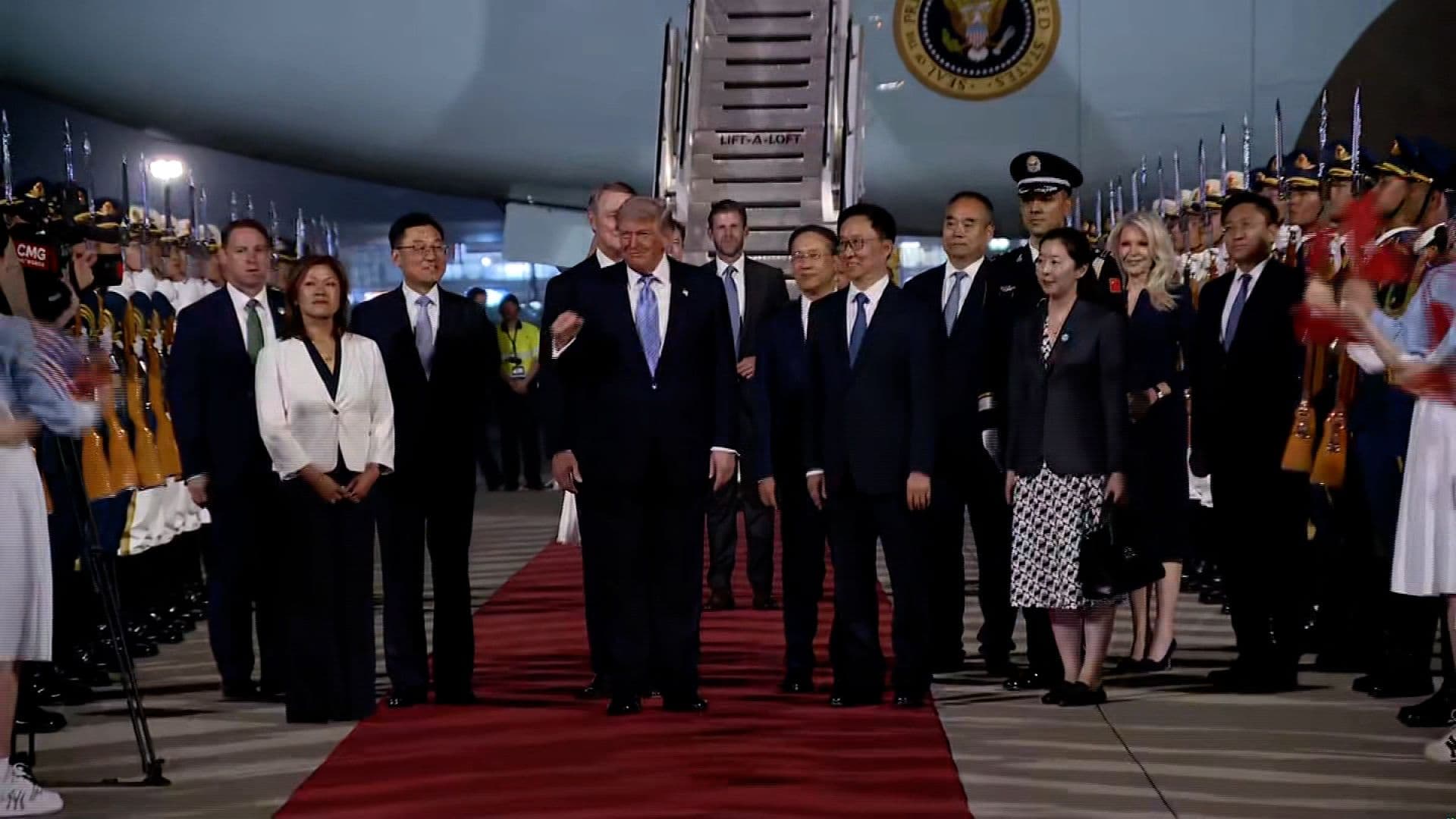
A Historic Arrival in Beijing
On May 14, 2026, US President Donald Trump touched down in Beijing for a two-day summit with Chinese President Xi Jinping — his first visit to China since 2017 and one of the most anticipated diplomatic events of his second term. The visit, originally scheduled for late March 2026, was delayed due to the ongoing US-Israeli military conflict with Iran. Now, with that conflict still unresolved, Trump is walking into the Chinese capital carrying a heavy diplomatic agenda and considerable political baggage at home.
The summit is being held at a time when Trump's approval ratings have hit record lows, largely tied to spiking gas prices caused by Iran's closure of the Strait of Hormuz. A foreign policy win — particularly a visible trade deal — could offer the president a much-needed boost ahead of the 2026 midterm elections.
The Road to Beijing: From Trade War to Trade Truce
To understand why this summit matters, it's important to trace how the US and China arrived here. When Trump returned to the White House for his second term, he immediately reignited trade tensions — imposing sweeping tariffs on Chinese goods that climbed as high as 145%. China retaliated with 125% tariffs on American products and threatened to restrict exports of rare earth minerals, critical materials used in everything from smartphones to fighter jets.
The turning point came in October 2025, when Trump and Xi met on the sidelines of the Asia-Pacific Economic Cooperation (APEC) summit in Busan, South Korea. That meeting produced a temporary trade truce: Washington agreed to reduce tariffs on Chinese goods from 57% to 47%, while Beijing committed to resuming large-scale purchases of American soybeans, postponing rare earth export restrictions, and cooperating on fentanyl trafficking. Trump rated the Busan meeting a "12 out of 10."
The Beijing summit is the next chapter — the first time the two leaders are meeting on Chinese soil during Trump's second term, with both sides hoping to deepen the fragile détente.
What's on the Agenda in Beijing?
The two-day summit covers an ambitious range of topics. US officials have confirmed that the primary focus areas include:
- Trade & Tariffs: Both sides are expected to announce new trade agreements, potentially including Chinese purchases of US agricultural products, Boeing aircraft, and energy. A joint US-China trade board has also been discussed by senior aides.
- Rare Earth Minerals & Semiconductors: China's leverage over rare earth exports — which it used effectively during the 2025 tariff war — remains a central issue. The US is pushing for guaranteed access, while talks on exporting more advanced US semiconductors to China are reportedly underway.
- Artificial Intelligence: AI governance and technology competition are expected to feature prominently, with analysts from the Council on Foreign Relations noting that AI has become as critical as tariffs in the broader US-China rivalry.
- Iran & the Strait of Hormuz: Trump has signaled he wants a "long talk" with Xi about Iran. Both nations have an interest in reopening the Strait of Hormuz, which Iran closed following the US-Israeli strikes, severely disrupting China's crude oil imports. Washington hopes Beijing will pressure Tehran to return to negotiations.
- Taiwan: The perennial flashpoint in US-China relations, Taiwan will likely come up — though no major breakthroughs are expected.
The Geopolitical Stakes
Trump's visit comes at a complex moment for both superpowers. China's economy expanded at a better-than-expected 5% rate in 2025, driven by a successful pivot to non-US export markets and growing self-sufficiency in advanced technology, including chips and mechanical products. Beijing enters these talks from a position of relative confidence.
Xi Jinping, who has long told officials that "time and momentum" favor China over the West, successfully outmaneuvered Washington during the 2025 tariff war by wielding China's rare earth dominance as leverage. Analysts at the Council on Foreign Relations argue that China enters the Beijing summit with the "upper hand," as the geopolitical and economic center of gravity has shifted since Trump's last China visit in 2017 — when Xi orchestrated a lavish state reception complete with a private dinner in the Forbidden City and the announcement of $250 billion in business deals.
This time, the pomp is expected to be considerably more muted — and the balance of power more contested.
Iran: The Elephant in the Room
Perhaps the most unpredictable element of the Beijing summit is the Iran question. Trump's visit comes just days after Iran's foreign minister visited Beijing, and ahead of an expected meeting between Xi and Russian President Vladimir Putin. Washington has been pressing China — Iran's largest trade partner and top buyer of its oil — to use its influence to bring Tehran back to the negotiating table.
Experts are cautious, however. While both the US and China benefit from stable energy flows through the Gulf, Beijing is unlikely to align too closely with Washington's confrontational approach toward Iran. As Gregory Poling, a senior fellow at the Center for Strategic and International Studies (CSIS), noted, China wants shipping through the strait restored — but on its own terms, not Washington's.
The war, which Trump had predicted would last just four to six weeks, has now dragged on for months with a ceasefire described by Trump himself as being on "massive life support." The prolonged conflict has given Xi additional leverage — a fact that is not lost on either side heading into the talks.
What Would a "Win" Look Like for Trump?
Analysts say Trump needs tangible, politically sellable outcomes from this visit. Those could include:
- A major announcement of Chinese purchases of US farm products — building on Beijing's existing commitment to buy 25 million tons of American soybeans annually.
- A framework agreement on semiconductor exports or AI cooperation.
- A public commitment from Xi to pressure Iran on the Strait of Hormuz.
- Progress toward a broader, comprehensive trade deal — something Trump has been promising since the Busan truce.
For China, the calculus is different. Beijing wants stable bilateral relations, reduced tariff pressure on its exporters, and — critically — Washington to hold off on new competitive measures in technology and defense. Analysts warn that China may use the summit to "manage" the US, encouraging Trump to delay necessary competitive steps in exchange for short-term stability.
Looking Ahead: A G2 in the Making?
The upcoming summit has revived discussion of a so-called "G2" — an informal special relationship between the world's two largest economies that effectively sets the global agenda. Advocates argue that Washington and Beijing coordinating on issues like trade, AI, and regional security could bring stability to a turbulent world. Critics, however, warn that a G2 arrangement would sideline US allies and give China undue influence over global rules.
Whether this summit marks the beginning of a new chapter in US-China relations or simply another pause in a long-running rivalry remains to be seen. What is clear is that the decisions made in Beijing over these two days will reverberate through global markets, supply chains, and geopolitics for years to come.
Key Takeaways
- Trump arrived in Beijing on May 14, 2026 for his first visit to China since 2017.
- The summit follows the October 2025 Busan trade truce, which temporarily paused the US-China tariff war.
- Key agenda items include trade deals, rare earths, AI governance, Iran, and Taiwan.
- China enters the summit from a position of economic resilience and geopolitical confidence.
- The Iran war looms large, with both sides having stakes in reopening the Strait of Hormuz.
- Analysts expect limited but visible deals — enough for Trump to claim a political win at home.
Frequently Asked Questions
Why is Trump visiting China in 2026?▼
President Trump is visiting Beijing for a two-day summit with Chinese President Xi Jinping to build on the October 2025 trade truce, negotiate new trade deals, discuss the Iran conflict and Strait of Hormuz crisis, and address issues around rare earth minerals, semiconductors, and AI. It is Trump's first visit to China since his 2017 trip.
What trade deals are expected from the Trump-Xi Beijing summit?▼
Aides from both sides have indicated that discussions will focus on a US-China trade board, Chinese purchases of US agricultural products (including soybeans and Boeing aircraft), energy deals, and progress on semiconductor exports. Analysts also expect movement on rare earth mineral access and possibly AI governance frameworks.
What is the significance of Iran during the Trump-Xi summit?▼
Iran's closure of the Strait of Hormuz has disrupted global energy flows, impacting both the US and China. Trump hopes Xi will use China's influence as Iran's largest trade partner to pressure Tehran back to the negotiating table. Experts, however, say China is unlikely to fully align with Washington's approach, as Beijing values its relationship with Tehran.
What is a 'G2' and why is it relevant to the Trump-Xi summit?▼
A 'G2' refers to an informal special relationship between the US and China — the world's two largest economies — where the two powers coordinate on global issues. The Trump-Xi summit has revived this concept, with some hoping their talks on trade, AI, and regional security could stabilize global affairs. Critics worry it could sideline US allies and grant China disproportionate influence.