How to Build a Business Using SaaS: The Complete Practical Guide
How to build a business using SaaS: a complete, practical roadmap from finding a real problem to validating it, building your MVP, pricing it correctly, launching, and growing recurring revenue.
SaaS Is a Business Model, Not Just a Type of Software
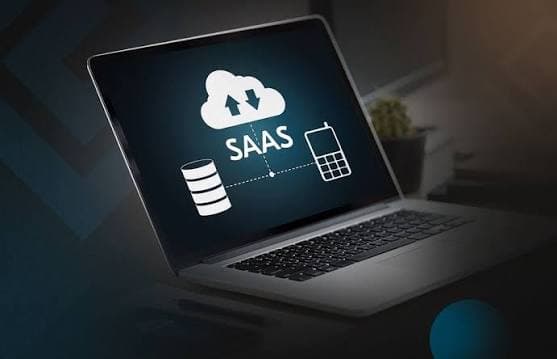
SaaS, Software as a Service, describes software that's hosted online and paid for through a recurring subscription instead of a one-time purchase. But building a SaaS business isn't really about the software itself, it's about building a repeatable way to solve a real problem for real people, well enough that they keep paying for it month after month. The technology is just the delivery mechanism; the business model is what actually needs building.
This guide walks through the full process, in the order that actually works, from finding a real problem to growing a business around it.
Step 1: Find a Problem Worth Solving, Not Just an Idea
The single biggest mistake founders make is starting with "I have a great idea for an app" instead of "I see a specific problem people are already paying, in time or money, to deal with." A strong SaaS idea usually starts from a problem you've personally experienced, watched someone else struggle with, or noticed people paying for a clunky, outdated, or manual solution to already.
- Look for pain, not just inconvenience: A real problem is one people are actively trying to solve, with spreadsheets, manual processes, or a worse competing tool
- Talk to the people who have it: Interviews, forums, and communities where your target audience already gathers (Reddit threads, industry Slack groups, niche forums) surface far better insight than assumptions
- Check if they're already paying for something adjacent: If people are paying for a worse or partial solution, that's a strong signal there's a real market underneath it
Step 2: Validate Before You Build Anything
This is the step that separates SaaS businesses that survive from the ones that quietly burn months building something nobody wanted. Validation means getting real evidence of demand, ideally real commitment, before writing a single line of production code.
- Landing page test: Describe the product, explain what it does and who it's for, and see how many people sign up for early access or a waitlist
- Pre-selling: Describe the product directly to people who have the problem and ask for a small upfront payment, a signed letter of intent, or at minimum a firm "tell me the moment it's live"
- Competitor and market research: Study existing tools solving a similar problem, their pricing, their reviews, and where they fall short, gaps in existing solutions are often where a new SaaS product finds its opening
Validation isn't fully complete until someone has shown genuine willingness to pay, interest and enthusiasm are encouraging, but money (or a real commitment to pay) is the signal that actually matters.
Step 3: Define a Clear, Narrow Core Value Proposition
Before outlining features, get precise about what your product actually does, for whom, and why it's better than what they're using now. A useful way to frame it: "For [specific type of customer] who struggles with [specific problem], our product [does this one thing] better than [current alternative] because [specific reason]." If you can't fill that sentence in clearly, the product idea likely still needs sharpening before you build.
Step 4: Build a Focused MVP, Not a Finished Product
An MVP (Minimum Viable Product) is the simplest version of your software that solves one specific problem well, not a stripped-down version of your eventual full product, but a focused tool built to test whether your core value proposition actually holds up with real users.
- Be ruthless about scope: Most effective SaaS MVPs launch with just three to five core features, not every idea on your roadmap
- Choose your build path deliberately: A no-code MVP can validate demand fast and cheaply; a custom-built MVP makes sense once you're ready to build on a foundation meant to scale
- Get the subscription and payment flow working early: Testing your pricing and billing model is part of the MVP, not an afterthought added later
- Plan for basic scalable architecture from the start: Even a simple MVP benefits from a clean foundation (proper database structure, a real authentication system, a maintainable codebase) so early technical debt doesn't strangle you once you start growing
| Build Path | Best For |
|---|---|
| No-code MVP | Validating demand fast and cheaply before committing to custom development |
| Custom-built MVP | Launching a scalable product with the essential features done properly |
| Advanced MVP with integrations | Products needing complex workflows or multi-tenant architecture from day one |
Step 5: Price It Properly, Not Arbitrarily
Pricing is a core part of the product, not something bolted on at the end. Getting it wrong, too low, too complicated, or misaligned with how customers get value, quietly caps your business's growth even if the product itself is good.
- Flat-rate subscription: One price, one set of features, simple to understand and easy for customers to budget around
- Tiered pricing: Different plans for different customer segments (starter, professional, enterprise), letting you capture more value from customers who need more
- Usage-based pricing: Customers pay based on how much they actually use the product, well suited to products where cost naturally scales with usage (API calls, storage, transactions)
- Freemium: A free tier drives adoption and word-of-mouth, but only works if the paid tier offers a genuinely compelling reason to upgrade, not just an artificial limitation
Test pricing directly with real prospective customers rather than guessing internally, and don't be afraid to introduce pricing early, even before the product is fully built, since willingness to pay is one of the clearest validation signals you can get.
Step 6: Launch Small, Not Big
A common instinct is to plan a big, polished public launch. A better approach for a new SaaS product is a quiet, targeted launch to a small, relevant audience, early adopters, a niche community, your existing network, where you can get direct feedback and fix real problems before wider exposure. A big loud launch to an audience that isn't primed for your specific product usually just burns attention you can't easily win back.
Step 7: Get Your First Customers Manually
Almost no successful SaaS business gets its first customers from paid ads or a big marketing push. Early customers come from direct, personal effort:
- Direct outreach: Personally messaging people who match your target customer profile
- Your existing network: Former colleagues, industry contacts, and communities you're already part of
- Niche online communities: Forums, Slack groups, and subreddits where your specific target audience already spends time
- One-on-one conversations: Every early sale is also a research opportunity, use these conversations to learn what's actually driving (or blocking) a purchase decision
This manual, unscalable-feeling phase is normal, and it's also where you learn the messaging, objections, and product gaps that inform everything that comes after.
Step 8: Track the Metrics That Actually Matter
Once you have real users, the right metrics tell you whether the business is actually working, not just whether it's busy.
| Metric | What It Tells You |
|---|---|
| MRR (Monthly Recurring Revenue) | Your predictable, repeating revenue, the core health signal of a SaaS business |
| Churn Rate | How many customers are leaving; high churn quietly undermines growth even with strong new sales |
| Customer Acquisition Cost (CAC) | How much it actually costs you to win each new customer |
| Lifetime Value (LTV) | How much revenue a customer generates over their time with you; should meaningfully exceed CAC |
| Activation Rate | How many new sign-ups actually reach the point of experiencing real value from the product |
Step 9: Iterate Based on Real Usage, Not Assumptions
Once your product is live and generating data, use it. Watch what features people actually use, where they get stuck or drop off, and what they ask for directly. SaaS businesses that grow steadily tend to iterate in tight, frequent cycles guided by real user behavior, rather than building out a long pre-planned roadmap in isolation.
Common Mistakes That Slow SaaS Businesses Down
- Building before validating: Investing months into a full product before confirming anyone actually wants it
- Overbuilding the MVP: Trying to launch with every feature instead of the smallest version that proves the core value
- Underpricing out of fear: Setting prices too low to avoid rejection, which undercuts the business's ability to grow and reinvest
- Ignoring churn: Focusing entirely on new sign-ups while overlooking why existing customers are leaving
- Scaling acquisition too early: Spending on broad marketing before the product and onboarding experience are actually ready to retain the customers it attracts
Have a SaaS idea and need it validated, built, and launched properly?
Our team helps founders go from idea to a working, scalable SaaS MVP, covering architecture, payments, and the technical foundation your business needs to grow.
Book a free call with our developer team →
The Bottom Line
Building a business using SaaS isn't really about writing software, it's about finding a real problem, proving people will pay to have it solved, building the smallest version that delivers on that promise, and growing from there through direct effort and honest iteration. The technology matters, but it only matters once you've done the harder work of confirming there's a real business underneath the idea.
Frequently Asked Questions
What does SaaS mean and why is it such a popular business model?▼
SaaS stands for Software as a Service, software hosted online and accessed through a subscription rather than installed and paid for once. It's popular because it creates recurring revenue instead of one-time sales, is accessible from anywhere, and is easy to update and improve continuously without customers needing to reinstall anything.
Do I need to know how to code to start a SaaS business?▼
No, not necessarily. You can validate your idea with no-code tools or a simple landing page, find a technical co-founder, or hire a development team or freelancer to build it for you. What you do need is a clear understanding of the problem you're solving and enough involvement to make good product decisions, coding skill itself isn't the bottleneck it used to be.
How much does it cost to start a SaaS business?▼
It varies enormously depending on approach. A scrappy, no-code MVP built by a solo founder can cost under a thousand dollars. A custom-built MVP with a small development team typically runs from roughly $15,000 to $40,000, and more complex products with integrations or multi-tenant architecture can run higher. The right starting budget depends on how much of the process you can do yourself versus what you need to outsource.
Should I validate my SaaS idea before building anything?▼
Related Blogs
Payment Gateway Integration in SaaS: Stripe, PayPal, Razorpay & Multi-Gateway Architecture
How to integrate payment gateways like Stripe, PayPal, and Razorpay into a SaaS product, why most growing SaaS platforms end up using more than one, and how to architect a multi-gateway payment layer without duplicating logic.

Can a Non-Technical Person Build Software With AI? The Honest Answer
Can a non-technical person really build software with AI? Yes — but here's the honest truth about what AI tools can do, what they can't, and why a professional developer still matters for a business-grade product.